
duolingo snapshots
Imagining a camera learning function to bring the real world into the Duolingo app for more immersive language learning.
Timeline: 3 Weeks
Roles: Product Designer, UX Researcher

Bridging The Gap Between Duolingo & Its Heritage Speakers
“Anyone can learn a language with Duolingo”: it’s the mobile language learning app that aims to provide functional, personalized, and fun language learning to all, with over 6 million English speaking users actively learning Duolingo Chinese.
According to a special Duolingo language report on Asian languages, Chinese learners are more motivated to study for family reasons than learners of other languages, and nearly 3.5 million people in the US are speaking Chinese as a second language in the home.
Many of these Chinese learners are heritage speakers. Heritage speakers are people who have learned a certain language informally from exposure home, and are often fluent in speaking and listening — but weaker at reading and writing about subjects beyond personal experiences due to a lack of formal learning.
But how does Duolingo address Chinese heritage speakers’ desire to effectively improve their reading and writing skills, given their unique spoken fluency? And how might we how might we adapt language learning for more experienced language learners?
Taking Advantage of "Language Touchpoints"
I dove further into the needs and pain points of Chinese heritage speakers by interviewing 5 students who learned Chinese from familial exposure, and actively speak the language at home. Participants were asked about their desired fluency in Chinese, past learning experiences, and obstacles to learning as a Chinese heritage speaker.
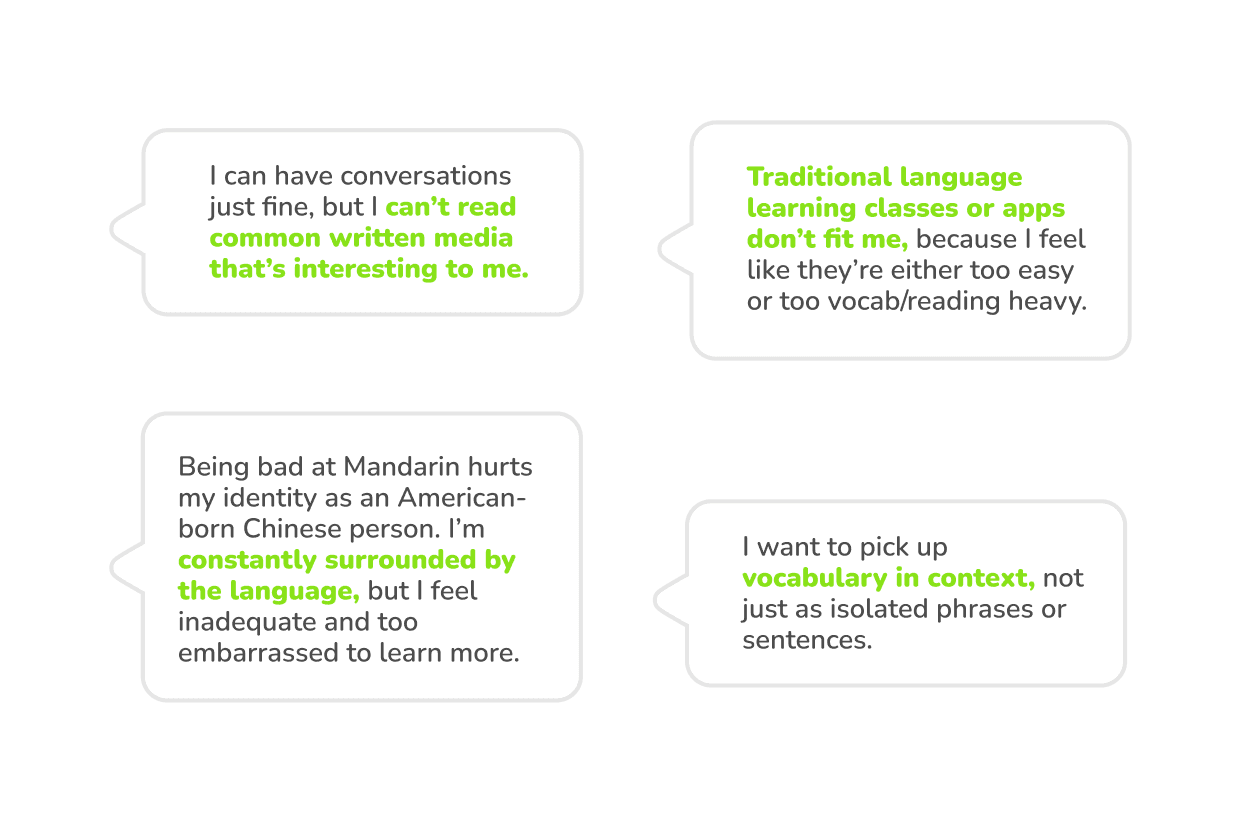
We can see that heritage speakers have a unique experience in the language learning world — they are often already surrounded by language “touchpoints,” or places where they encounter the language in their daily lives, due to their day-to-day immersion in the culture.
Therefore, it seems that heritage speakers would learn best by taking advantage of their “touchpoints” or existing immersion. So…
How might we bring real world touchpoints into the Duolingo app for more immersive language learning?
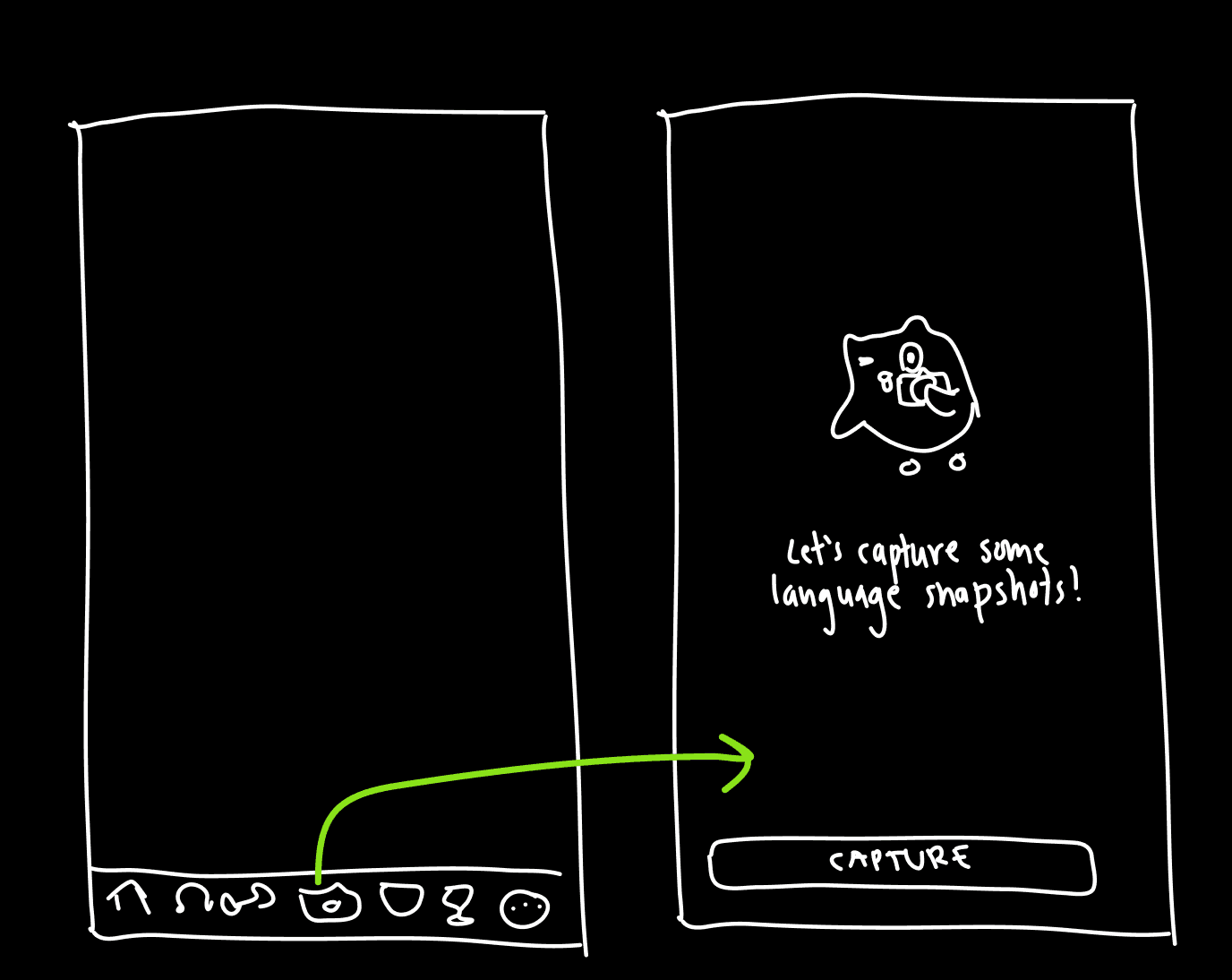
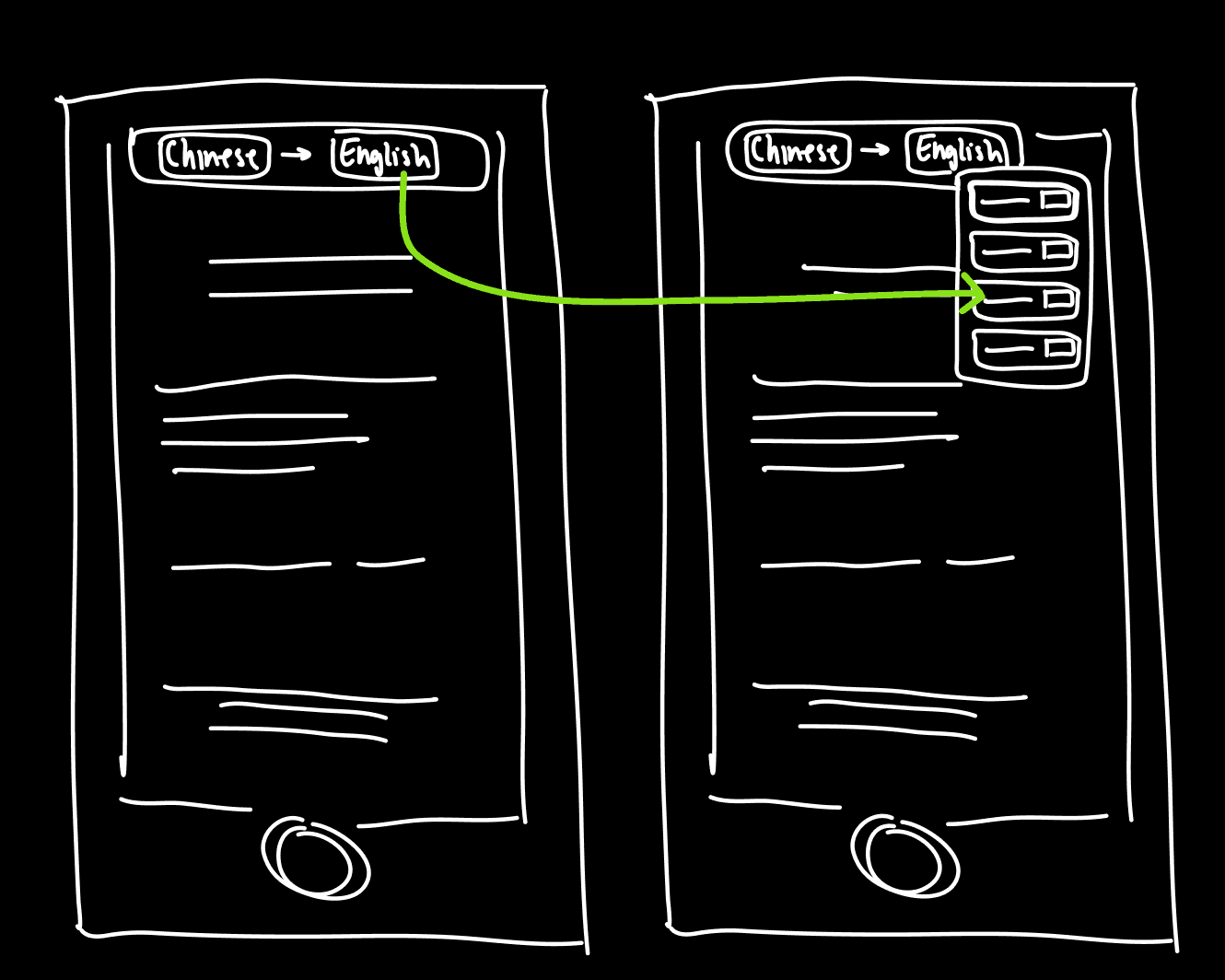

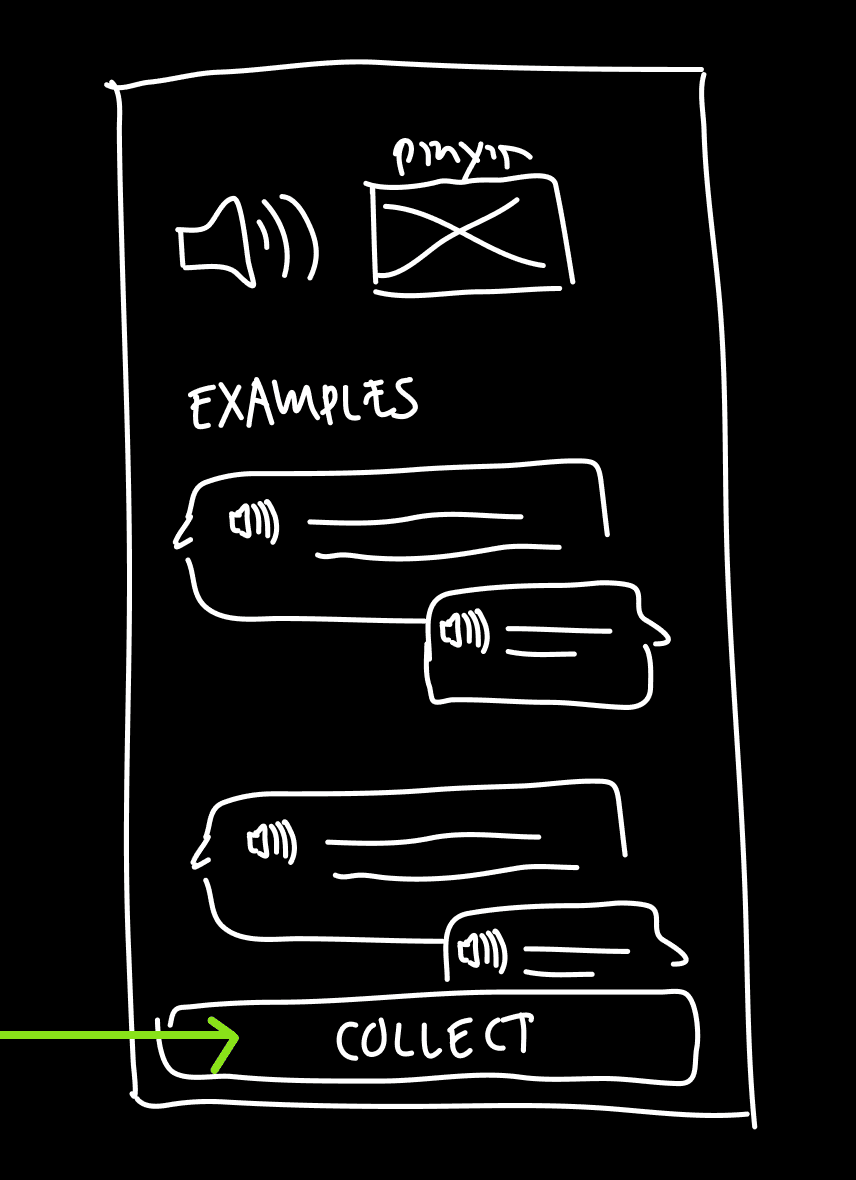
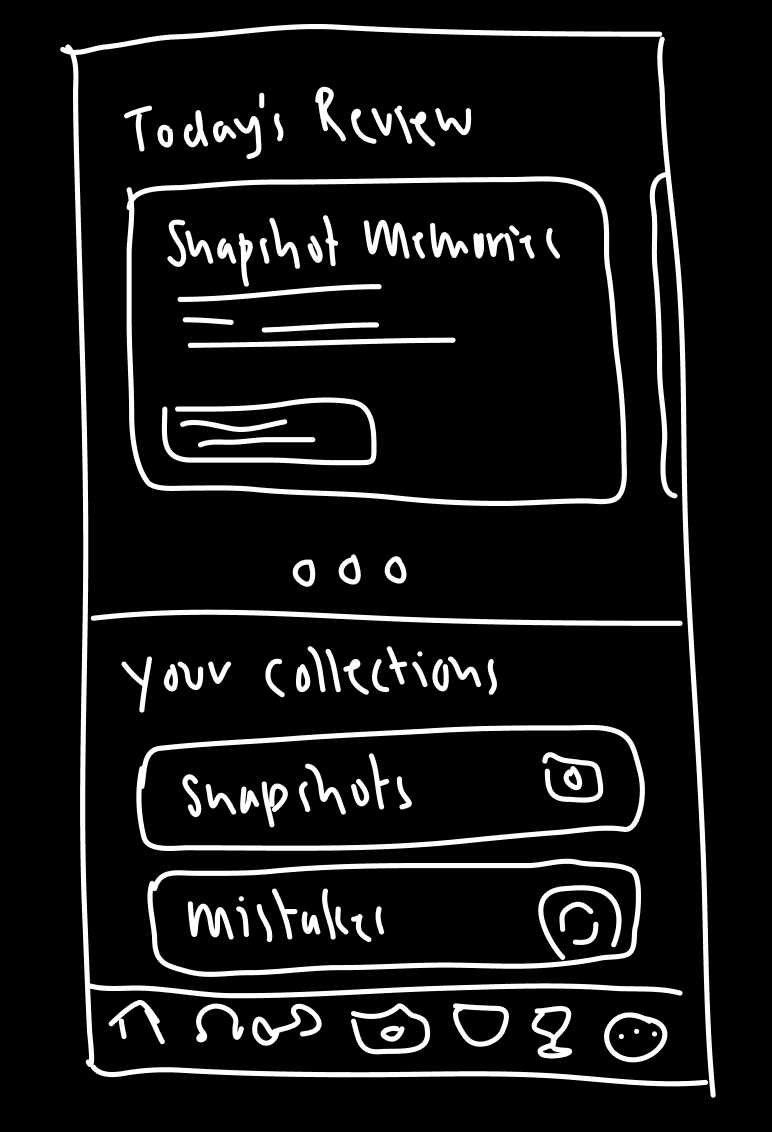
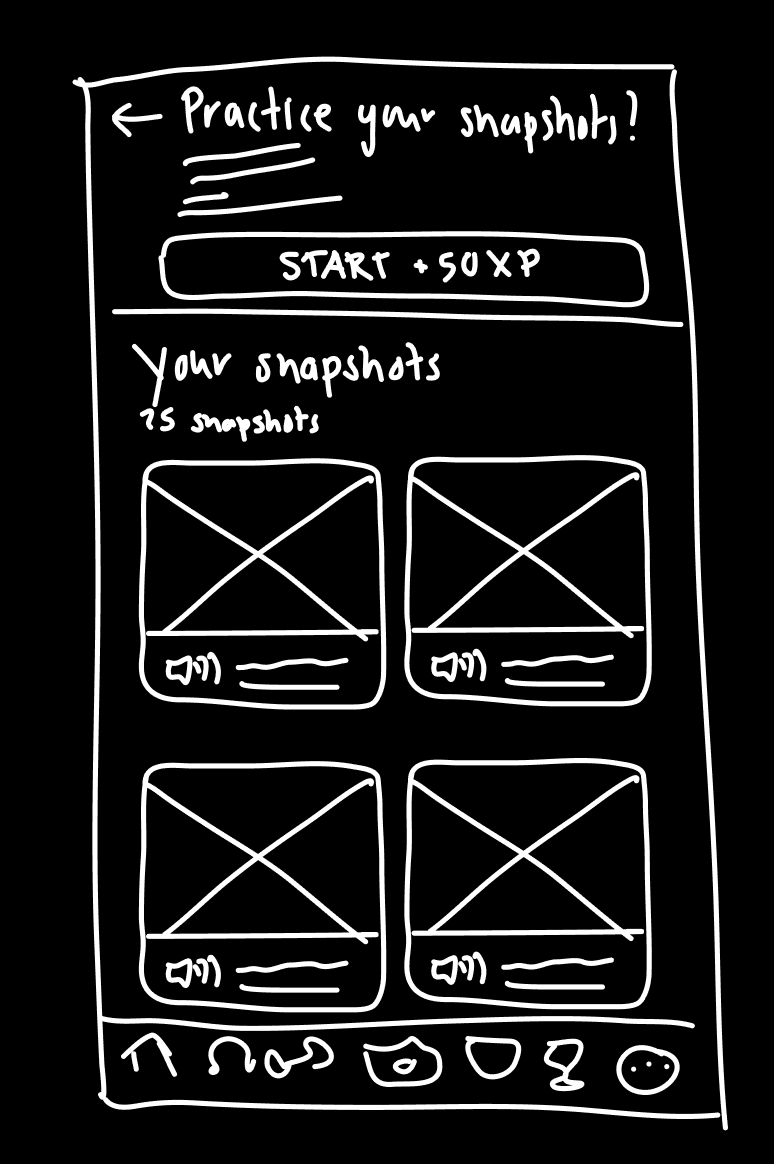
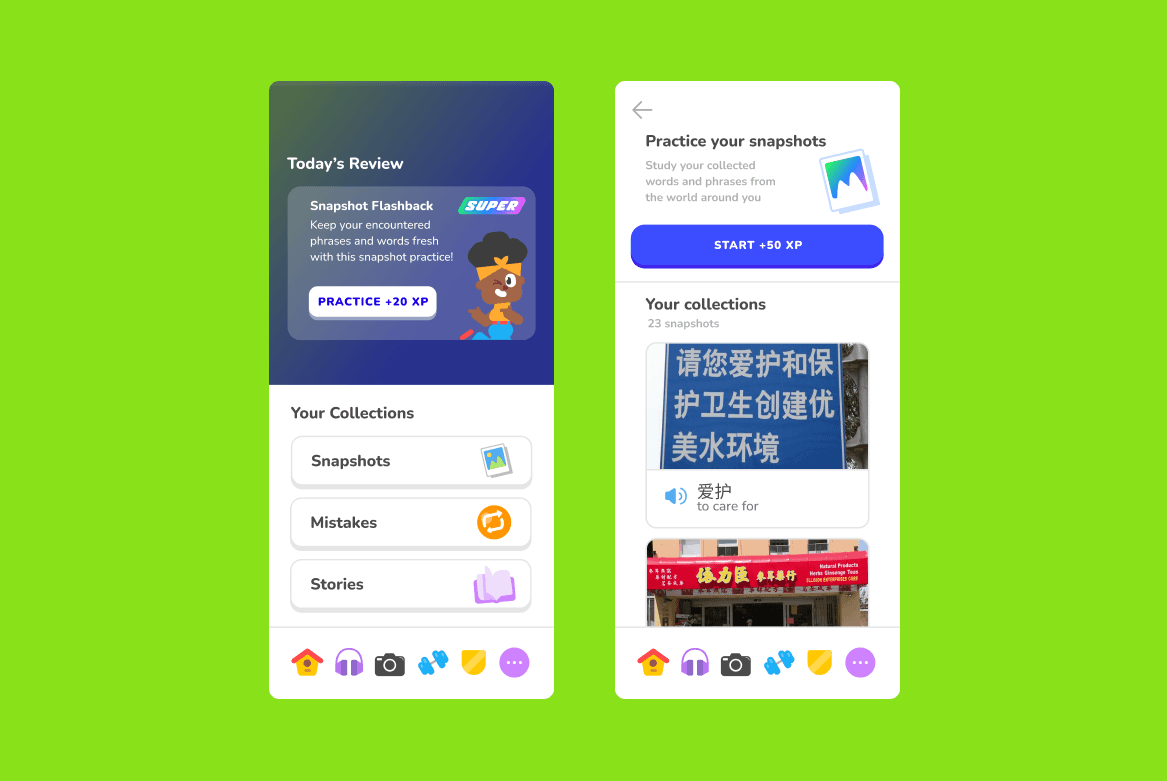
In sum, there were three major features proposed:
The tips page and hanyu learning page now has been redesigned for individual character definitions, with opportunities for more nuanced definitions and applicable example phrases.

The individual collections pages have been redesigned to accommodate visual snapshots alongside learned phrases, allowing users to attach more significance and memory to the phrases they learn.
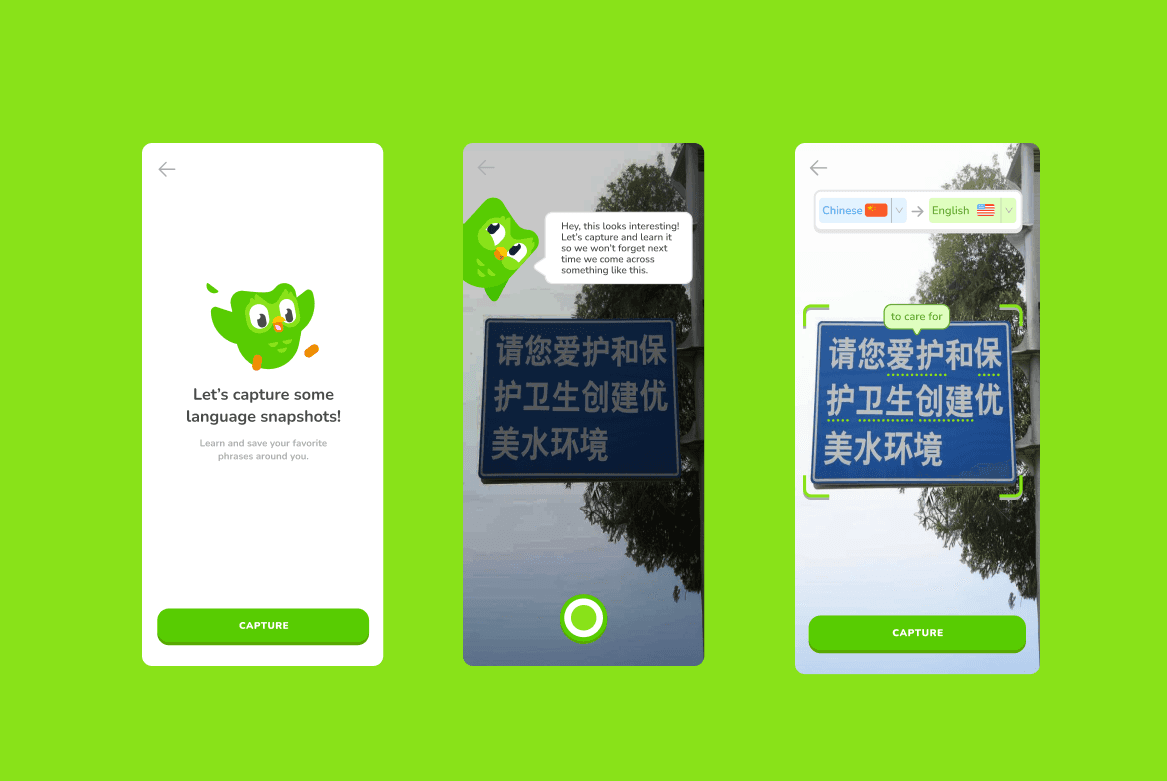
The camera function ties these existing systems together to bring a sense of real-world connection, targeting and teaching meaningful phrases of interest.
Implementation and Duolingo Snapshots’ Potential
Duolingo Snapshots would ideally implemented as an included Super feature within the Practice Hub, exclusive to dedicated learners who are more likely to be immersed in the language and motivated to revisit their phrases of interest that they’ve encountered.
Duolingo Snapshots has a lot of potential for expansion! Here are some nice-to-haves and additional implementations:
Location feature: logging where snapshots were collected.
Social function: sharing what snapshots your friends have collected recently, or what snapshots were collected near a given location.
Notifications: personalized reminders of past snapshots.
Edge case: when the character is misrecognized by the camera, implementing button that says “This isn’t right!” and allows the user to manually correct the character.